

Spring 2027 At California State UNiversity, Monterey Bay (CSUMB)
Otter Student Union, CSUMB, Seaside
Saturday, February 27, 2027, 8:30am — 4:40pm
Invited Speakers
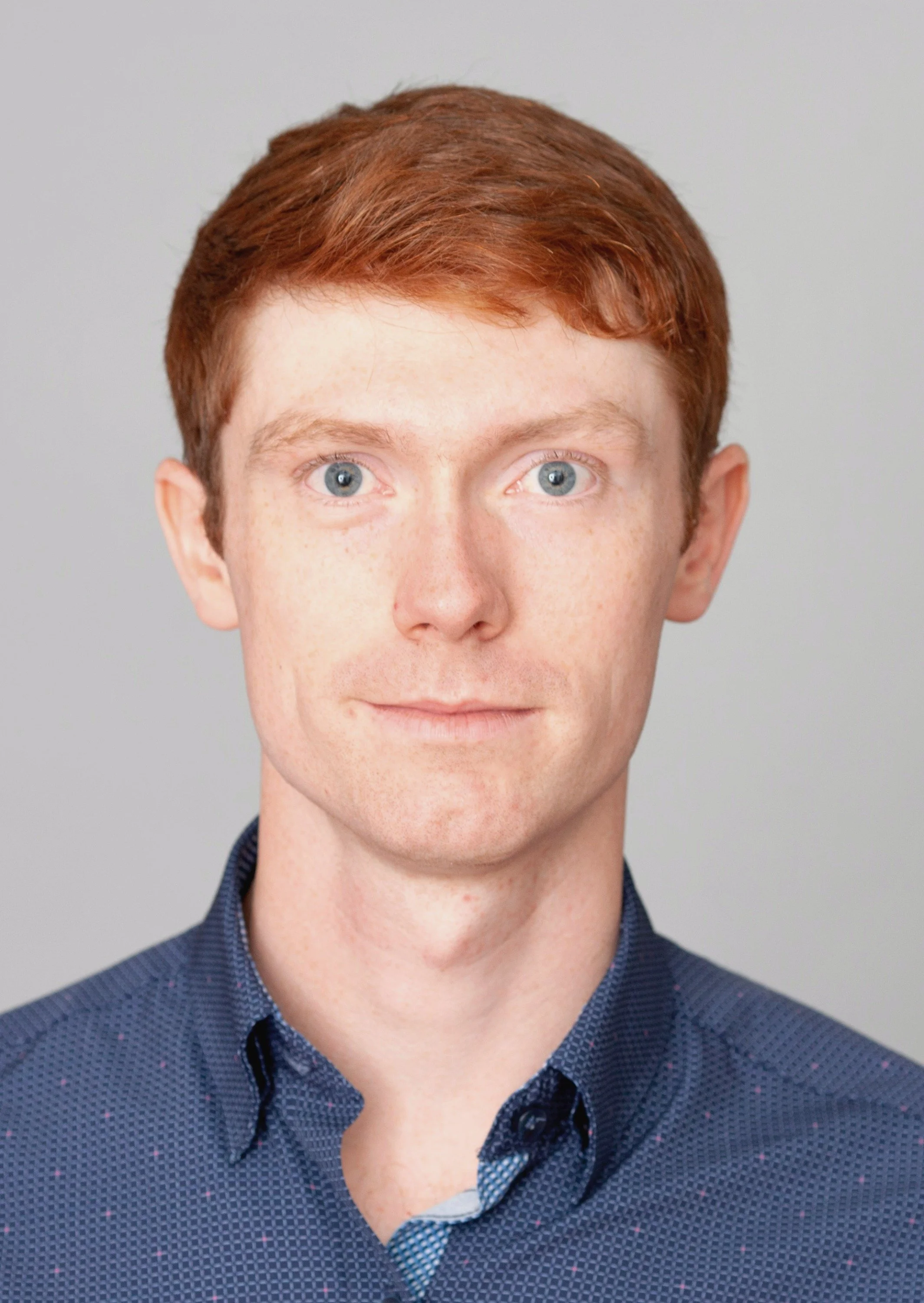
Alexander Strang, UC Berkeley
-
Alexander Strang is an assistant teaching professor at UC Berkeley. He earned a PhD in applied mathematics from Case Western Reserve University in 2020, and served as a Kruskal Instructor at the University of Chicago from 2020 - 2023. He teaches courses in probability, Bayesian statistics, and information theory. He works on empirical validation of hierarchical prior models, statistical testing in cryo-electron microscopy, and empirical game theory.
-
Abstract: Most numerical problems involve many related variables coupled through multiple equations. Most multivariate problems are intractable unless they are linear. Linear problems are tractable in high dimensions because linearity allows decomposition; one n-dimensional problem can be broken into n one-dimensional problems that can be solved independently or in sequence. Among the available decompositions, the most powerful are frequently diagonalization methods. Unfortunately, diagonalization is expensive so is impractical unless the user has access to a fast method. Remarkably, if the linear problem of interest admits a symmetry, then that symmetry can be used to constrain the space of available eigenvectors.
We will discuss methods for quickly identifying eigenvectors from symmetries of linear problems. In particular, we will recall classical results relating the eigenvectors of an operator to the eigenvectors of an operator it commutes with to show that, if an operator admits a symmetry of action, then its eigenfunctions can be expressed as products of Fourier basis functions with an amplitude function. The Fourier term is entirely specified by the structure of the symmetry, while the amplitude function must be computed from the operator.
We will emphasize this perspective as a unifying justification for the ubiquity of the Fourier Transform and show a practical application for quickly detecting ribosomes in Cryo-Electron-Microscopy images of cells.
Amelia Farid, UC Merced

-
TBD
-
Abstract: TBD
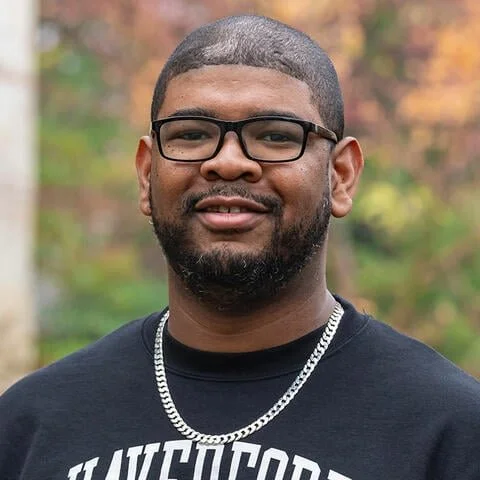
Reginald McGee, Haverford College
-
My name is Reginald (RB) McGee, and I am currently an associate professor of mathematics and statistics at Haverford College. I was born, raised, and public-school-educated in Saginaw, Michigan and then attended Florida A&M University as an undergraduate. I completed my Ph.D. in Mathematics at Purdue University and then completed a three-year postdoctoral fellowship at the Mathematical Biosciences Institute at The Ohio State University. My research program considers computational biology and bioinformatics, and I often investigate the interplay between models and biomedical data. My primary scientific interests lie in blood diseases and health disparities.
-
Abstract: In linear algebra, we learn many benefits to finding a basis for a vector space, and when there is an orthogonal basis available it brings a smile to your face like a 50 degree day. When the vector space of interest is the collection of polynomials, we can apply the Gram-Schmidt process to the monomials and arrive at a basis of pairwise orthogonal polynomials. Interestingly, we also find that orthogonal polynomials arise through other means such as recurrence relations and as solutions of differential equations. In this talk, we will discuss popular families of orthogonal polynomials and look at how they help get to the root of fundamental tasks in scientific computing such as polynomial interpolation and numerical integration.
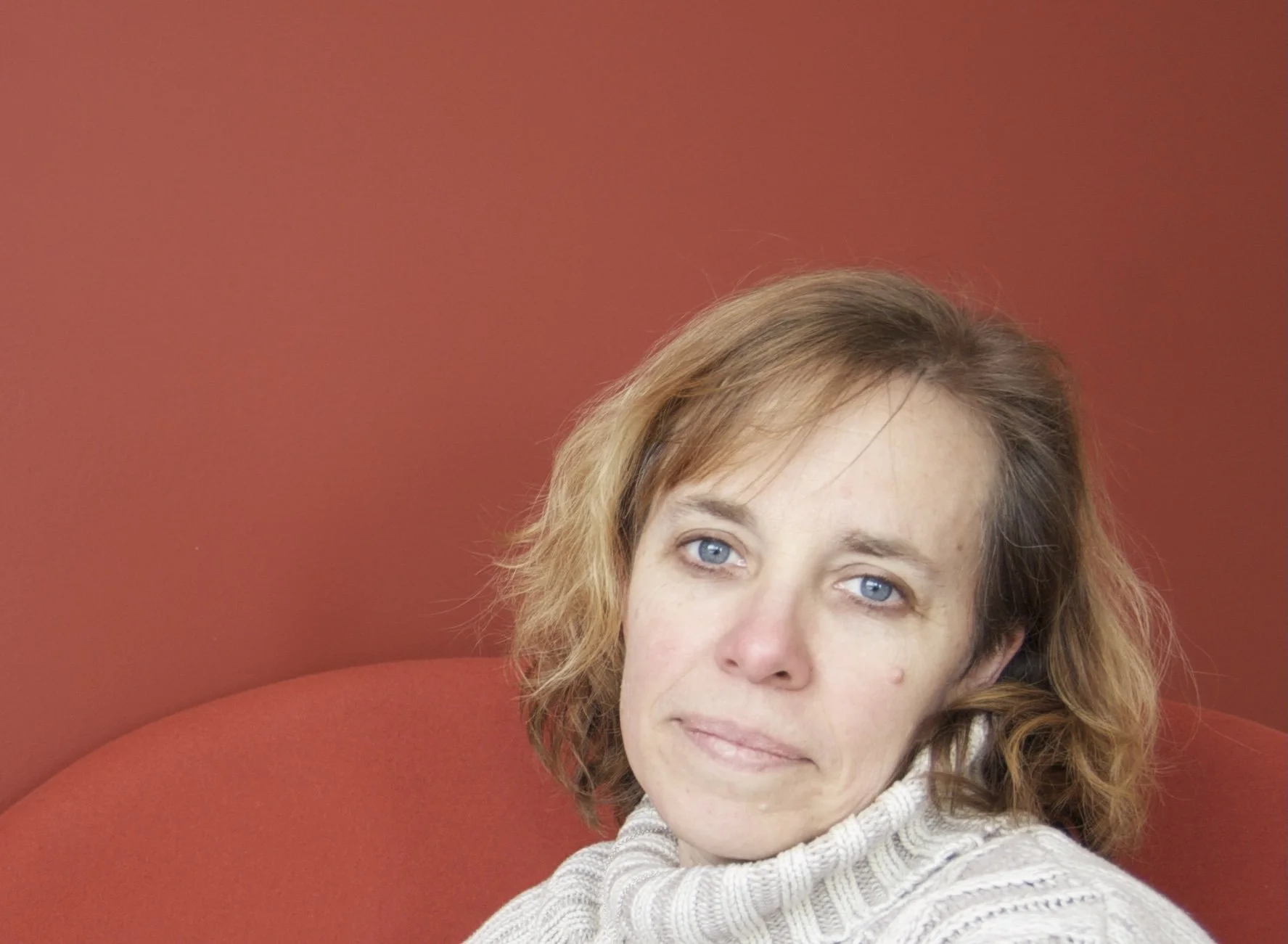
Annalisa Crannell, Franklin & Marshall College
-
Annalisa Crannell is the Carmie L. and Beatrice J. Creitz Emerita Professor of Mathematics at Franklin & Marshall College, the former Interim Editor of the American Mathematical Monthly, the Chair of the MAA Carus Monographs series, and recipient of both her college’s and the MAA's distinguished teaching awards. Her early research was in topological dynamical systems (also known as "Chaos Theory"), but she subsequently became active in working with mathematicians and artists on Projective Geometry applied to Perspective Art. Together with mathematician/artists Marc Frantz and Fumiko Futamura, she is the author of Perspective and Projective Geometry and Viewpoints: Mathematical Perspective and Fractal Geometry in Art. Her current book project explores the geometry of optical illusions arising from perspective tricks. She especially enjoys talking to non-mathematicians who haven't (yet) learned where the most beautiful aspects of the subject lie.
-
Abstract: Perspective geometry, so it's said, is the geometry of art that makes paintings seem realistic and true to life. Yet the same artistic techniques—and by extension, the same geometry—can create images that astound and confound us. We explore the geometry behind a carnival of such illusions, from images that seem to change shape as we move, to the impossible worlds of Escher and del Prete.
Registration
TBD
Schedule
| Time | Event | Presider |
|---|---|---|
| 8:30am | Registration / Refreshements | |
| 9:30am | Opening Remarks | Jeffrey Wand and Michael Scott |
| 9:45am | Alexander Strang, Symmetries and Eigenvectors | Anu Aiyer |
| 10:35am | Break / Discussion of Section Business (all are welcome) | |
| 10:55am | Amelia Farid, TBD | Lei Yue |
| 11:45am | Lunch | |
| 12:30pm | Poster Session | |
| 1:15pm | Teaching Award | Ed Keppelmann |
| 1:35pm | Reginald McGee, Orthogonal Polynomials in Scientific Computing | Will Dana |
| 2:25pm | Break | |
| 2:40pm | Ignite Talks | Ed Keppelmann |
| 3:25pm | Break | |
| 3:40pm | Annalisa Crannell, Double Take: Geometry, Perspective, and Optical Illusions | Frank Farris |
| 4:30pm | Closing Remarks | Jeffrey Wand |
| 4:40pm | END |
Local information
📍Location: Otter Student Union, Inter-Garrison Rd, Seaside
🅿️ Parking (free): Lot 71. There will be parking attendants handing out parking passes and giving directions.
🛜 WiFi: Use “CSUMB guest”. Visitors from participating institutions can also use “eduroam”. See more information here.
Nearby Hotels
SpringHill Suites by Marriott The Dunes On Monterey Bay, Marina CA (0.9 miles from campus)
215 10th St, Marina, CA 93933Home2 Suites by Hilton at the Dunes on Monterey Bay, Marina CA (0.95 miles from campus)
225 10th St, Marina, CA 93933Hampton Inn & Suites Marina, Marina CA (2.9 miles from campus)
120 Reservation Rd, Marina, CA 93933